The main coffee-producing countries

Els principals països productors de cafè

Have you ever wondered where the coffee you drink comes from? More than 70 countries are dedicated to the production of the second most consumed beverage in the world, although some have more weight than others.

For example, Colombia, Brazil, and Vietnam together account for almost 33% of global coffee production, even surpassing the African continent, where the plant originated.

Join us in reading this post if you want to learn in depth which are the main coffee-producing countries, as well as their origins and some specific characteristics of each area.

Brazil: The largest coffee producer

Data shows that Brazil is the world's largest coffee producer, accounting for 38% of global production, with 20% of crops corresponding to Arabica varieties and 80% to Robusta coffee.

However, this supremacy has not always been the case. The introduction of coffee to Brazil came at the hands of a sergeant, who took advantage of one of his trips to French Guiana to bring it with him clandestinely.

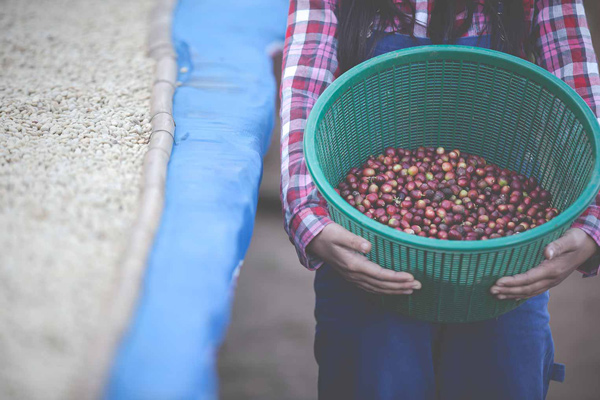
The loot would eventually be planted and harvested in the northern region of Pará, and would later extend to Rio de Janeiro, although today it is in other areas of the country where cultivation has continued.

Brazil experienced a period of consolidation of its coffee production, limited exclusively to local trade, but in the mid-19th century its situation changed as a result of the commercial intentions of Brazilian entrepreneurs, who focused all their efforts on this raw material.

Quickly, production increased, so much so that it led to a generalized drop in prices, which allowed this product to become popular and accessible to everyone, not only nationally, but also globally.

Currently, as one of the most important coffee-producing countries, it is estimated that just over 2.1 million hectares are dedicated to coffee cultivation, which generates 8.5 million jobs dedicated to the cultivation of both Arabica and Robusta coffee (known in Brazil as Conilon), thanks to the great diversity of coffee production.

Vietnam: The second largest coffee producer

Around 1860, the arrival of French missionaries in this country, bringing this raw material from the island of Bourbon, marked the beginning of coffee production in Vietnam, now consolidated as the second largest coffee producing country, with 15% of global production.

The arrival of French coffee growers initiated cultivation, but the success of coffee in this territory did not occur until the early 20th century, when more and more plantations began to appear. However, the country's unstable situation during that century led to the exile of a large part of the population and the intermittent abandonment of cultivated fields.

The truth is that it wasn't until well into the 1990s that coffee production began to advance significantly. It was then that its export also began and the number of companies involved in this industry increased, leading to Vietnam's consolidation as the second largest coffee producing country before the 21st century.

After rice, coffee is its main crop, with an area of more than 600,000 hectares, of which approximately 70% are dedicated to the Robusta variety, which is exported through an effective commercial strategy, focused on the great quality-price ratio of these coffees produced in large quantities.

Indonesia among the main producers of high-quality coffee

Continuing with our ranking of the main coffee producing countries, Indonesia also stands out. Coffee cultivation in this territory began in the late 17th century with the arrival of Europeans to the islands.

Its production encompasses both Arabica and Robusta coffee, characterized by their great flavor and complex nuances. The crops are concentrated by 80% in the regions of Sumatra, Java, and Sulawesi, with Sumatra standing out, where Arabica coffee with fine acidity and tropical fruit and citrus flavors is grown.

Each year they produce more than 600,000 tons and stand out as the country of origin of the world's most expensive coffee, Kopi Luwak, whose price is around 400 euros per kilo.

Ethiopia: The origin of almost all Arabica coffee plants

Almost all Arabica coffee plants come directly or indirectly from Ethiopia. Data places it as the fifth largest coffee producing country, and it was already used in the 14th century by the tribes of the area.

This country produces almost 4.5% of global production each year, about 7.6 million bags of coffee beans, recognized for their high quality. These beans result in coffees with an authentic and unmistakable flavor, an intense aroma, and just the right amount of acidity.

Among the most notable regions is Sidamo, a fertile territory with lush forests, high altitude, and a tropical climate with abundant rainfall, which result in a superior quality bean, making Ethiopian coffee one of the best in the world.

Honduras: One of the best coffee producing countries with sustainable cultivation

Although production in Honduras is lower than in the aforementioned countries, the quality of Honduran coffee is so high that it cannot be left out of our ranking of coffee-producing countries, with a harvest of more than 7 million bags annually.

In Honduras, they focus on obtaining the Arabica variety; their crops are located at high altitudes and under shade, and their coffee stands out for offering fruity flavors and a light acidity, as is the case of the Pacamara variety, recognized worldwide.

It is worth noting that shade-grown harvesting preserves biodiversity, harboring all kinds of animal and plant species, which brings even more benefits to the soil where one of the best coffees grows.

India among the top 10 coffee producing countries

The origin of coffee in India, as in other cases, has been mixed with legends and real events. Thus, the legend has been consolidated that the saint Baba Budan managed to bring seven coffee beans to this country, hidden in his robe, after returning from a pilgrimage to Mecca.

Initially, coffee production in India did not play a very prominent role, and it was not until well into the 19th century, with the increasing taste for these beans, that these crops began to be promoted with greater commercial interest, experiencing an exponential increase in the land dedicated to coffee plantations.

Today, the improvement in this sector is palpable in every sense, achieved thanks to the years of experience of coffee producers and traders, which has led India to be among the top 10 coffee producing countries.

Costa Rica: The best sustainable coffee

Continuing our tour of coffee-producing countries, the origin of coffee in Costa Rica dates back to the late 18th and early 19th centuries, as a result of the arrival of seeds from the Antilles.

Its production is mostly Arabica, with characteristics and nuances very favorable to the taste and smell of those who consume it. The harvests are carried out in very fertile volcanic soils with low acidity, located at high altitudes, between 800 and 1,600 meters, depending on the plantation.

Likewise, this country stands out for the sustainability of its crops, sustainable coffee, where good agricultural practices stand out, such as shade management and the renewal of coffee plantations, ensuring high biological diversity and minimal application of chemicals.

This sustainability also extends to the social, economic, and labor spheres, as part of the efforts in this country and sector are directed towards cooperative crops, committed to offering work and welfare to the Costa Rican population under the best conditions, as is the case of the Tarrazú Cooperative.

Nicaragua: Superior quality coffee

Coffee from Nicaragua is also grown under shade, in fertile lands and at suitable altitudes, resulting in a high-quality bean, also as a consequence of its traditional harvesting, which avoids chemicals as much as possible and promotes organic fertilizers, biological controls, and manual harvesting for better care.

As a result, the coffee obtained in Nicaragua has an exceptional flavor, with fruity notes and a citrus and chocolate touch.

Kenya: World-class coffee

Kenya is considered one of the countries producing the best coffee in the world, thanks to its Arabica variety crops, located in fertile, deep, volcanic soils at high altitudes.

These factors positively influence its flavor, characterized by greater acidity and intensity, as well as its aroma. The Kirinyaga region, on the slopes of Mount Kenya, particularly stands out, where the orographic conditions are unbeatable for growing one of the best coffees in the world.

Do you want to try coffee from any of these origins? Discover the magnificent and interesting flavors offered by coffee crops around the world at Cafès Roma.

Date